
Jersey City History Dr. Martin Luther King Jr.
Martin Luther King Jr.’s Connection to Jersey City
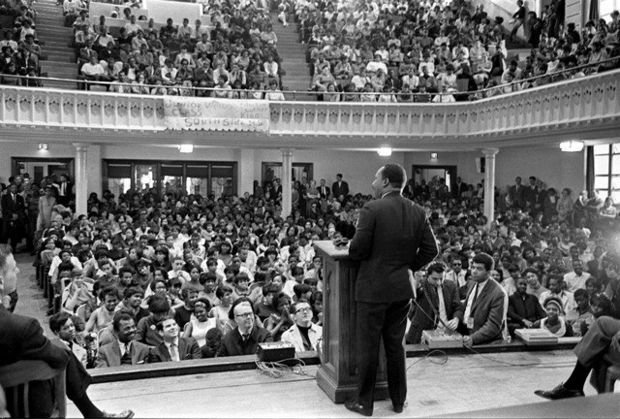
“The time is always now”
-Martin Luther King at St Peters university in Jersey city.
Martin Luther King Jr. in Jersey City: Visits, Speeches, and Local Impact
Martin Luther King Jr.’s connection to Jersey City reflects the city’s place within the broader civil rights movement of the mid-20th century. While Dr. King was not based in Jersey City, he visited and spoke here during key moments of national struggle for racial justice. His presence reinforced and amplified local civil rights efforts already underway rather than initiating them.
Understanding Dr. King’s relationship to Jersey City requires grounding his visits in local context—recognizing both the significance of his message and the leadership of those who were already organizing on the ground.
When Martin Luther King Jr. Visited Jersey City
Dr. King spoke in Jersey City during the height of the civil rights movement, when Northern cities were confronting entrenched racial inequality, particularly around housing, employment, and education. His visits occurred within a broader pattern of travel to cities where local leaders were addressing discrimination beyond the segregated South.
Jersey City’s racial challenges—including restrictive housing practices and economic inequality—made it a relevant location for Dr. King’s advocacy, even as the city’s civil rights movement was largely driven by local leadership.
“Make a career of humanity. Commit yourself to the noble struggle for equal rights. You will make a better person of yourself, a greater nation of your country, and a finer world to live in,”
- Martin Luther King Jr. 1959 speech in Jersey City New Jersey
What Dr. King Spoke About in Jersey City
When speaking in Jersey City, Dr. King emphasized themes that resonated deeply with local conditions:
Housing discrimination and segregation
Economic justice and access to opportunity
Nonviolent resistance as a moral and strategic approach
These messages aligned with ongoing struggles faced by Black residents in Jersey City, particularly in neighborhoods affected by redlining, displacement, and unequal access to public resources.
Dr. King’s speeches did not introduce new issues to the city; rather, they gave national visibility and moral authority to challenges that residents were already confronting daily.

Dr. King's presence in Jersey City was a beacon of hope amidst the turmoil both locally and across Hudson County. His speech at the St Peters College was a clarion call for unity and action, drawing in not only local citizens but also the watchful eyes of the Jersey City police, FBI agents, and ROTC officers who maintained strict security. The audience was a mirror of society itself, with individuals from every walk of life seated side by side, transcending social and economic divides. Wealthy businessmen, legal and medical professionals, welfare mothers, educators, students, religious figures from various denominations, activists from the Catholic Peace Fellowship, and young women from the Job Corps Center for Women were all united by King's compelling oratory.
The audience itself was an example of community unity:
"People who often are at odds with each other on petty local issues sat quietly to listen and joined enthusiastically to help," the editorial reads. "Such occasions when a neighborly understanding spreads everywhere are all too rare in Jersey City."
King's visit to Jersey City was also a response to the city's challenges. He aimed to quell the anger and pain that were afflicting the city and redirect those emotions towards meaningful change and tangible. His approach was to inspire action through peaceful means, encouraging the Jersey City community to strive for equality and justice without resorting to violence.
During this critical juncture in American history, Jersey City, much like many other cities across the nation, was caught in the throes of racially charged riots and uprisings. The African American community, long subjected to systemic neglect, abuse, and disenfranchisement, had reached a boiling point, incited by decades of police brutality and racial profiling. The summer of 1964 had been particularly intense, with several incidents igniting a series of riots that persisted until Dr. King's transformative visit
Local Civil Rights Leadership in Jersey City

In the days leading up to his untimely death, Martin Luther King Jr. delivered one of his final and most impactful speeches to a packed audience at the Metropolitan A.M.E. Zion church in Jersey City. It was a momentous occasion, marking Dr. King's second visit to the city within three years, and tragically, his last. The church was filled to the brim with a diverse crowd of 2,000 listeners, while several hundred more were gathered outside, eager to catch the reverberations of his voice through loudspeakers.
Dr. Martin Luther King Jr. brought with him a new spirit of unity for the Jersey City community. His presence brought together an audience that itself was a reflection of the Jersey City community. Dr. King skillfully addressed the pain and anger of a divided community, channeling it towards constructive change and civil action. He urged the aggrieved to participate in the political process, to vote, and to uphold their civil duties as a means to continue the progress achieved in civil rights. He implored them to reject the separatist ideologies of Black extremist groups and instead embrace his vision of international brotherhood, emphasizing how technological advancements had shrunk the world into a single neighborhood.
"What we need is persistent, insistent, nonviolence where we stand up against the evil system without destroying property"
Dr. King's words resonated deeply, offering solace to a tense and heartbroken city. His repeated calls for brotherhood and his directive for peaceful engagement with the political system were a testament to his belief that despite the strides toward equality, the fight against racial injustice was far from over. It was this powerful message that helped to heal and unify Jersey City, leaving an indelible mark on the hearts and minds of those present.
Tragically, just eight days after delivering this message of hope and unity during his second visit to Jersey City, Martin Luther King Jr.'s life was cut short by an assassin's bullet, leaving behind a legacy of courage, resilience, and an unyielding quest for justice.
“Doctors, lawyers, and wealthy businessmen sat next to welfare mothers. There were teachers and students, ministers, priests, nuns, a group from the anti-war Catholic Peace Fellowship, and young girls from the Jersey City Job Corps Center for Women. There were young children who sat next to their parents in unusual silence, considering that many of them had waited for several hours for Dr. King to come. Black militants spoke quietly to moderate ministers. Poverty agency officials and political leaders were there, as well as people who generally denounce politicians and criticize the war on poverty.”
Why Dr. Kings Presence in Jersey City Matter
Dr. King's legacy in Jersey City continues to inspire the community. The principles he championed are reflected in the ongoing efforts of local institutions, such as the Jersey City Free Public Library, to serve the evolving needs of their diverse community, demonstrating a commitment to inclusivity and equality. King's impact also prompts the city to remember and honor his words and actions through various commemorative events and activities.
Dr. King’s presence in Jersey City carried symbolic and strategic importance.
His visits:
Validated the struggles of Black residents in Northern cities
Drew attention to housing and economic injustice outside the South
Strengthened connections between local organizers and national movements
Crucially, Dr. King did not “bring” civil rights to Jersey City. He acknowledged and supported a movement that already existed. He honored the agency and leadership of Jersey City’s Black community.
Jersey City Within the Broader Civil Rights Movement
Jersey City’s civil rights history demonstrates that the fight for racial justice was not confined to one region. Northern cities faced their own forms of segregation—often less visible but equally damaging.
Dr. King’s engagement with Jersey City highlights how national civil rights leaders recognized these realities and sought to address them alongside local activists.
Courtesy of Jersey City TV
“It was his speech that day that united a divided community; It was his words that helped heal a tense and heartbroken Jersey City. King repeated his pleas for international brotherhood, that modern technological advances have made a neighborhood of the world.”









Explore Related Black History in Jersey City
To better understand the full scope of Black history and civil rights in Jersey City, explore these related resources:
Together, these stories offer a more complete and accurate picture of how change occurred in Jersey City.
